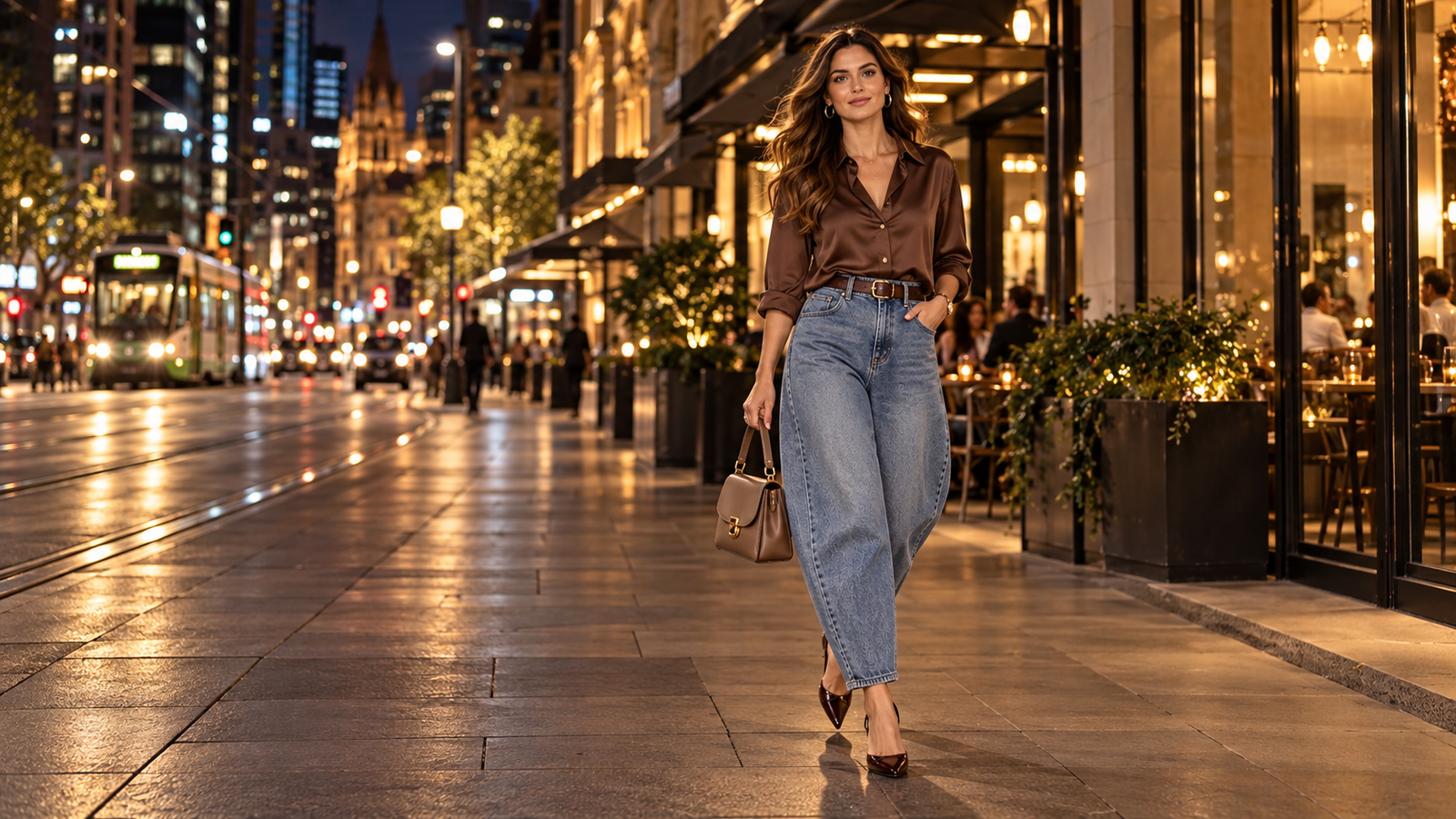
Autumn in Melbourne rarely asks you to dress for one temperature.
You can leave home on a cold morning wearing a coat, find yourself carrying it by lunchtime, then reach for it again when the wind picks up on the way home. Add a warm train, an air-conditioned office or a sudden shower and getting dressed starts to feel less like styling and more like planning.
That is the real job of a Melbourne autumn capsule wardrobe.
It should give you enough flexibility to add or remove layers without rebuilding your whole outfit. It should work across office days, weekends and the occasional evening out. Most importantly, the pieces should work together often enough that getting dressed becomes easier, not more complicated.
This guide uses a practical capsule of around sixteen pieces as a starting point. The number is not a rule. The goal is simply to build a smaller wardrobe where most pieces can be worn in several ways and still make sense as Melbourne moves from warmer March afternoons into cooler May mornings.
What Does an Autumn Capsule Wardrobe Actually Mean?
A capsule wardrobe is a smaller group of clothes chosen because they work together.
For autumn in Melbourne, versatility matters more than having a perfectly coordinated collection. A useful piece should ideally work across more than one type of day and more than one temperature.
A shirt, for example, might be worn on its own during a mild afternoon, under a knit on a cooler morning or beneath a blazer for work. Tailored trousers can move from the office to the weekend simply by changing the shoes and outer layer.
There is no correct number of pieces.
Some wardrobes function perfectly well with ten or twelve items. Others need closer to twenty because work, weekends and social plans require different levels of polish.
A better question is whether each piece earns its place.
Can you wear it at least two or three different ways? Does it work with several other pieces you already own? Can it handle more than one part of the season?
If the answer is yes, it probably belongs in the capsule.
The Fashwe Melbourne Layering System
Melbourne autumn dressing becomes much easier when you stop thinking in terms of one complete outfit and start thinking in layers.
For Fashwe, the system has four parts.
1. Base layer
This is what you are comfortable wearing once everything else comes off. Think a good T-shirt, fitted long-sleeve top, fine merino layer or simple shirt.
The base needs to look finished on its own because there will be plenty of afternoons when the coat and knit end up over your arm.
2. Mid layer
A lightweight knit, cardigan or shirt adds warmth without making the outfit bulky.
This should be something you can take off easily when the temperature changes. A cardigan is especially useful because it can come on and off without disturbing the rest of the outfit.
3. Outer layer
This could be a trench, blazer, wool coat or weather-resistant jacket depending on the day.
Your outer layer handles the coldest parts of the morning and evening, but it should still be practical enough to carry if the afternoon warms up.
4. Practical shoes
Footwear deserves to be part of the layering system because the weather affects what happens below the ankle too.
Loafers can be ideal for a dry office day. Sneakers make more sense when you will be walking for hours. Ankle boots become much more useful once the pavement is wet and the mornings are colder.
The best Melbourne autumn outfit is often the one you can adjust in less than a minute without needing to completely rethink it.
A Practical 16-Piece Melbourne Autumn Capsule
This is a working example rather than a shopping checklist.
If you already own something that does the same job, use it. If a piece does not suit your lifestyle, leave it out.
| Category | Piece | Why it earns a place |
|---|---|---|
| Outerwear | Trench coat | Useful for wind, light rain and everyday layering |
| Outerwear | Relaxed tailored blazer | Works across office days, dinners and weekends |
| Outerwear | Warmer coat or jacket | Useful once mornings become properly cold |
| Tops | Fitted long-sleeve top | A simple base that can stand alone or sit under layers |
| Tops | Classic collared shirt | Works buttoned, open over a tee or under knitwear |
| Tops | Good-quality T-shirt | Useful on warmer days and under tailoring |
| Knitwear | Lightweight merino or fine knit | Adds warmth without becoming bulky |
| Knitwear | Medium-weight cardigan | Easy to add and remove throughout the day |
| Bottoms | Tailored trousers | A reliable option for work and more polished outfits |
| Bottoms | Dark straight-leg jeans | Covers casual Fridays and weekends |
| Bottoms | Relaxed or wide-leg trousers | A comfortable alternative for longer days |
| Dress or skirt | Midi skirt or simple shirt dress | Adds variety without becoming difficult to layer |
| Shoes | Loafers | Polished enough for work and easy to restyle |
| Shoes | Clean neutral sneakers | Useful for commuting and walking-heavy days |
| Shoes | Ankle boots | Helpful on colder or wetter days |
| Accessory | Structured tote or crossbody bag | Practical enough for work while fitting into most outfits |
Outerwear That Actually Earns Its Place
Outerwear takes up more room than almost anything else in a wardrobe, so each piece should have a clear job.
A trench coat is useful through much of autumn because it gives you wind protection without the weight of a winter coat. Wear it open over a knit on a mild day or over tailored trousers when you want the outfit to feel more polished.
It will not replace a proper warm coat once the temperature drops, and it is not the answer to every rainy day, but it covers a large part of the season well.
A relaxed blazer works when a coat feels too heavy. It is particularly useful if your week moves between office outfits and more casual plans because it changes character depending on what sits underneath it.
Wear it over a T-shirt and jeans on the weekend, then pair it with trousers and loafers for work.
A warmer coat or jacket becomes more useful later in the season. You may not reach for it much in March, but by late autumn it can be the piece that makes everything else in the capsule more wearable.
You do not necessarily need all three on day one.
If you already have a trench and blazer that work well, wait until the colder weather arrives before deciding whether another coat is genuinely missing.
Tops and Knits That Work When the Temperature Changes
The best test for a base layer is whether you would still be happy wearing it once the outer layers come off.
If a top only works when hidden underneath a coat and jumper, it is less useful in a season where the temperature can change across the day.
Lightweight cotton, fine merino and other breathable fabrics are especially practical because they can sit comfortably underneath a blazer or knit without adding too much bulk.
A collared shirt is useful because it can do several jobs. Wear it buttoned under a jumper on a cold morning, open over a T-shirt on a milder afternoon or tucked into trousers for work.
Fine knitwear generally layers more easily than very chunky jumpers. Heavy knits can still have a place, but if they are too bulky to fit under your coat, they become less flexible.
A cardigan is also worth considering if you regularly move between different temperatures. It is easy to remove at your desk and just as easy to put back on before heading outside.
Bottoms That Work Beyond One Kind of Day
A useful capsule should not require a completely separate wardrobe for work and weekends.
Tailored trousers are one of the easiest pieces to move between the two.
With a blazer and loafers, they feel appropriate for the office. With sneakers, a T-shirt and a trench, they become much more relaxed.
Dark straight-leg jeans can cover casual Fridays, weekends and low-key evenings. If your workplace allows denim, they can also work with a collared shirt or blazer.
A relaxed or wide-leg trouser adds another option for days when comfort matters. Choose something that still works with the same tops, knits and jackets already in the capsule.
The more pieces that can swap roles, the easier the wardrobe becomes to use.
Shoes for Melbourne Autumn
There is no single shoe that covers every autumn day, which is why three different types can be more useful than owning several versions of the same style.
Loafers work well on dry days when you want something polished but not overly formal. They pair easily with trousers, jeans, skirts and dresses.
Clean sneakers make sense for commuting, errands and any day involving a lot of walking. They can still look considered when the rest of the outfit is simple and well put together.
Ankle boots become more useful as the mornings get colder and wet weather becomes more common. A sole with decent grip is worth prioritising if you spend much of the day walking outside.
If you regularly commute in one pair of shoes and work in another, there is nothing wrong with keeping loafers or flats at your desk and travelling in something more practical.
A Colour Palette That Does Not Have to Be Beige
A neutral base makes a capsule wardrobe easier to mix, but neutral does not have to mean wearing beige from head to toe.
Navy, charcoal, cream, black, camel and chocolate can all work as foundations because they combine easily with one another.
Then add one or two colours you genuinely enjoy wearing.
Burgundy, olive, deep green, soft blue or muted pink can all work without making the capsule difficult to coordinate.
Texture can also do some of the work that colour normally does. A ribbed knit, brushed wool coat, satin skirt or textured trouser gives a simple outfit more interest without requiring another print or bright colour.
One of the easiest styling tricks is to keep most of the outfit within one colour family and use a jacket, shoe or bag as the contrast.
7 Melbourne Autumn Outfit Formulas
The point of a capsule is not simply owning fewer clothes. It is knowing how to use them on the kinds of days you actually have.
| Scenario | Outfit formula | Why it works |
|---|---|---|
| CBD workday | Tailored trousers + fitted top + relaxed blazer + loafers + trench if needed | Polished enough for work, with layers that are easy to remove indoors |
| Casual Friday | Dark jeans + fine knit + blazer or cardigan + sneakers | Comfortable without looking like a weekend outfit |
| Weekend coffee | Midi skirt or shirt dress + cardigan + ankle boots | Easy to put together and practical for walking |
| Dinner after work | Tailored trousers + shirt + blazer + ankle boots | Works through the day without needing a full outfit change |
| Wet-weather commute | Dark jeans + merino layer + weather-resistant outer layer + ankle boots | Prioritises warmth and practicality while still feeling put together |
| Weekend errands | Jeans + T-shirt + sneakers + light jacket or cardigan | Comfortable enough for walking while using the same capsule pieces |
| Evening drinks | Relaxed trousers or midi skirt + fitted top + blazer + loafers or boots | A little more polished without requiring separate evening clothes |
The pattern is fairly simple. Most of the wardrobe stays the same. One or two pieces change depending on the weather and where you are going.
If your office wardrobe is the part you struggle with most, our Smart Casual Work Outfits for Women in Australia guide has more ideas for putting those pieces together.
How the Capsule Changes From March to May
Melbourne autumn does not feel exactly the same from the beginning of March to the end of May, so the way you use the capsule should change too.
March can still have plenty of mild weather. T-shirts, shirts and lighter layers may do most of the work, with the trench or blazer covering cooler mornings and evenings.
April is when layering becomes more important. You are likely to reach for knitwear more often, and having both a light outer layer and something warmer starts to become useful.
May usually pushes the wardrobe closer to winter. The warmer coat becomes more relevant, boots appear more often and fine knitwear starts becoming a regular base rather than an occasional layer.
You should not need to rebuild the capsule each month.
The same pieces simply move higher or lower in the rotation as the season changes.
What You Probably Do Not Need to Buy
Before making a shopping list, go through what is already in your wardrobe.
A trench from last year does not stop working because a slightly different trench appears in stores this season. The same applies to coats, jeans, basic tops and knitwear.
Look for the actual gap.
Maybe your old boots have become uncomfortable. Maybe the blazer you own no longer fits the way you want it to. Maybe your wardrobe is full of tops but you do not have one practical outer layer for a cold morning.
That one missing piece is more useful to identify than following a generic list of things every autumn wardrobe is supposedly meant to contain.
A capsule works best when it solves a problem in the wardrobe you already have.
Where to Shop the Gaps in Australia
Once you know what is actually missing, shop for that category rather than shopping for another complete outfit.
If you need tailoring, look specifically at trousers or blazers. If you need a warmer layer, compare coats. If comfortable work shoes are the gap, start there instead of buying another knit because it happens to look good in store.
Retailers such as Country Road, Witchery, COS and Uniqlo often carry the kinds of tailoring, knitwear and wardrobe basics that can fit into a capsule, while more affordable retailers can be useful for simpler casual pieces.
Ranges and pricing change regularly, so it makes more sense to compare what is available when you are actually ready to buy rather than building the capsule around one specific product.
For more places to look, see our guide to Affordable Minimalist Clothing Brands in Australia.
The Fashwe Take
Sixteen pieces is not the goal.
The goal is reaching the point where the clothes in your wardrobe already know how to work together.
You should be able to take the same trousers from Monday to Saturday, wear the same blazer with jeans and workwear, and add or remove a layer without feeling like the whole outfit has fallen apart.
That matters even more in Melbourne, where an outfit often has to deal with more than one version of the weather before the day is over.
A good capsule should make that easier.
Not because you own the perfect number of clothes, but because the clothes you do own have enough flexibility to keep up with your actual week.
Frequently Asked Questions
How many pieces should an autumn capsule wardrobe have?
There is no fixed number. Around fifteen to twenty pieces can be a useful starting point if you need outfits for both work and weekends, but the right number depends on your lifestyle, dress code and how often you prefer to repeat outfits.
What should I wear in Melbourne in autumn?
Choose outfits that can be layered easily. A base layer, light knit or cardigan, practical outer layer and shoes suited to the day’s weather will cover many autumn situations without requiring a complete outfit change.
Do I need a trench coat for Melbourne autumn?
No single item is essential, but a trench is useful because it works across mild, windy and lightly wet days without the weight of a full winter coat. If you already own another lightweight jacket that does the same job, there is no need to buy one simply to complete a capsule.
What shoes work best in Melbourne during autumn?
Loafers are useful on dry office days, sneakers make sense for long walking or commuting days, and ankle boots become more practical when the weather is colder or wetter.
What colours should I choose for an autumn capsule wardrobe?
Start with colours you already wear frequently. Navy, charcoal, cream, black, camel and chocolate are easy to combine, but adding one or two accent colours can keep the wardrobe from feeling overly uniform.
Do I need to buy a completely new wardrobe for autumn?
No. Start with what you already own and identify the pieces that are genuinely missing. A capsule wardrobe should help you use your existing clothes more effectively, not give you a reason to replace everything at once.